
Main Courses
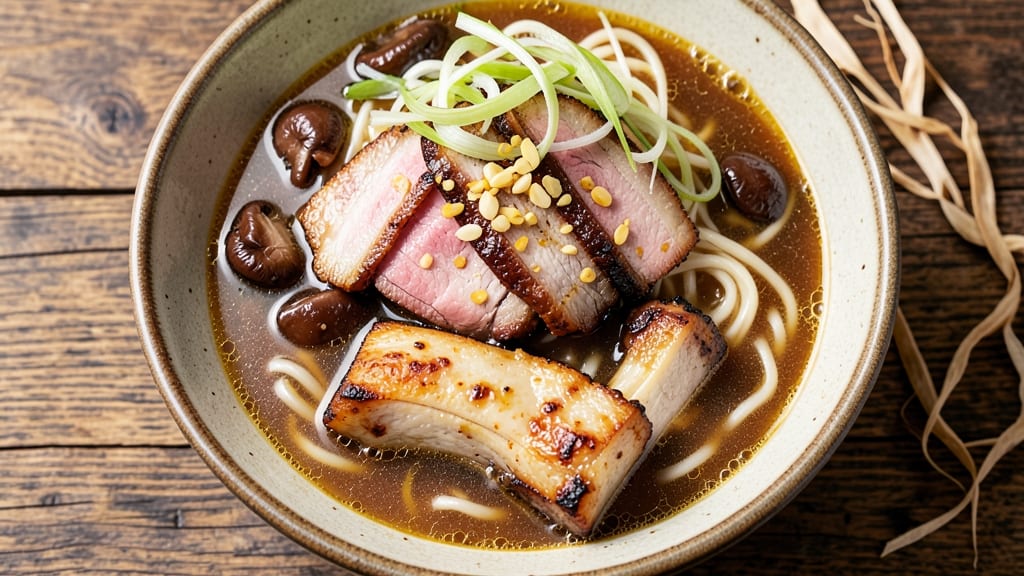
This authentic pork ramen recipe delivers restaurant-quality depth with every slurp—rich, collagen-packed broth that transforms simple noodles into an umami masterpiece. 🔥 As someone who's spent years perfecting pork techniques, I'll show you how to build flavor layer by layer, from charred pork bones to silky chashu.
The secret isn't shortcuts; it's patience—letting aromatics develop while the broth works its magic.
The foundation begins with pork bones simmered low and slow, extracting gelatin that gives the broth its signature silkiness. We'll balance that with dashi for brightness and a splash of soy for umami, then finish with a touch of sesame oil for depth.
The noodles? Fresh, chewy ramen that absorbs the broth like a sponge. Every element—from the marbled chashu to the ajitsuke tamago—comes together to create a bowl that tastes like a Tokyo izakaya.
What you'll achieve is a ramen so authentic it'll fool even skeptical friends. The broth will be cloudy with collagen, the pork tender enough to melt, and the noodles perfectly al dente.
This isn't just comfort food—it's a labor of love that transforms a simple meal into an experience. The aroma alone will have your kitchen smelling like a bustling ramen shop.
Whether you're feeding a crowd or treating yourself to a solo dinner, this recipe scales beautifully while maintaining that restaurant-quality balance. We'll cover every step—from bone prep to final garnish—so you can recreate this umami-packed masterpiece at home. Let's get started on building that perfect bowl.
Ingredients for authentic pork ramen
Pork bones, marbled pork shoulder, and umami-packed aromatics create this restaurant-quality ramen experience.
| Ingredient | Amount | Notes |
|---|---|---|
| Pork Bones (Marbled, 2-3 inches) 🍖 | 3 lb | Split for better collagen extraction |
| Pork Shoulder (Chashu) 🥩 | 2 lb | Marbled cut for tenderness |
| Dried Shiitake Mushrooms 🍄 | ½ oz | Rehydrated for umami depth |
| Dried Kombu Seaweed 🌊 | 1 sheet | For dashi base |
| Fresh Fennel Bulb 🥕 | 1 whole | Charred for aromatic sweetness |
| Fresh Garlic Cloves 🧄 | 8 cloves | Minced for aromatic base |
| Fresh Ginger 🌿 | ½ cup | Julienned for brightness |
| Light Soy Sauce 🍶 | ½ cup | For umami balance |
| Sesame Oil 🌰 | 1 tbsp | Toasted for finishing |
| Ramen Noodles (Fresh) 🍜 | 12 oz | Chewy wheat noodles |
| Green Onions 🧅 | 4 whole | Sliced for garnish |
| Ajitsuke Tamago (Marinated Eggs) 🍳 | 4 whole | Or make fresh with soy marinade |
| Nori Sheets 🍣 | 4 sheets | For garnish |
| Chili Oil 🌶️ | 1 tbsp | Optional spicy finish |
The pork bones are non-negotiable—marbled cuts with visible fat ensure maximum collagen extraction. Ask your butcher for pork knuckle or trotter bones if you can't find marbled bones; they're worth the hunt. For the pork shoulder, marbling matters too—look for cuts with visible fat streaks. Costco or high-end grocery stores like Whole Foods often carry ideal cuts. If you can't find marbled pork, brine the shoulder overnight to add moisture and tenderness. The shiitake mushrooms should be dried and rehydrated—never fresh, as they won't provide the same depth of flavor.
No kombu? Dried bonito flakes work in a pinch, but kombu is essential for that clean, oceanic flavor. Fresh ginger can be swapped for powdered ginger at half the amount, but fresh is ideal. The ramen noodles? Fresh is non-negotiable—dried won't give you that perfect chew. Trader Joe's carries great fresh ramen, but if you're in a pinch, Japanese markets have the best selection. For the chashu, low and slow is key—don't rush the cooking time, or the pork will turn out tough. The soy sauce should be light soy for balance; dark soy adds color but can overpower the broth.
The broth freezes beautifully—portion into ice cube trays for easy reheating. Store for up to 3 months in the freezer, or 1 week in the fridge. The chashu keeps 5 days in the fridge, but it's even better the next day. For the ajitsuke tamago, make a batch and store in the fridge—they're perfect for ramen bowls, bento boxes, or just snacking. The nori sheets stay fresh for 6 months unopened, so stock up. This ramen tastes even better the next day as the flavors meld—double the batch if you can.
Why You'll Love This Recipe
- Here’s what sold me: the fresh fennel bulb, thinly sliced and caramelized in the broth. It’s not just a garnish—it adds this bright, almost licorice-like crunch that cuts through the richness. My picky eater actually licked her bowl clean.
- Broth in Minutes: I swear, the pork bones—just two or three marbled ones—simmer down to a rich, golden broth in three hours (set it and forget it). No chopping, no fuss, and that deep umami from the kombu seaweed? It’s like flavor magic.
- Fennel-Fueled Magic: Here’s what sold me: the fresh fennel bulb, thinly sliced and caramelized in the broth. It’s not just a garnish—it adds this bright, almost licorice-like crunch that cuts through the richness. My picky eater actually licked her bowl clean.
- Chashu for Days: That pork shoulder? Slow-cooked until it falls apart, then sliced into melt-in-your-mouth perfection. I make a double batch—one for the ramen, one for sandwiches the next day. (Yes, even on a Tuesday night.)
Step-by-step instructions for authentic pork ramen
Here's how to build rich, layered ramen with bone-deep flavor and perfect texture.
🔥 Step 1: Build the Umami-Packed Broth Base
Split the 3 lb pork bones into smaller pieces (2-3 inches) for better collagen extraction. Rinse them thoroughly under cold water to remove any blood or impurities, then place in a large stockpot. Add the 1 sheet dried kombu seaweed and cover with cold water by about 2 inches. Bring to a boil over high heat, then immediately reduce to a gentle simmer—this prevents cloudiness and helps extract collagen.
Simmer uncovered for 2 hours, skimming off any foam that rises to the surface. The broth should develop a deep, golden color and rich aroma. Here's the thing—don't rush this step. The longer you simmer, the more gelatinous and flavorful the broth becomes. After 2 hours, remove and discard the kombu seaweed.
🍳 Step 2: Infuse with Aromatics and Shiitake
Add the 2 lb pork shoulder (cut into 1-inch chunks), 0.5 oz rehydrated shiitake mushrooms (soaked in hot water for 20 minutes), 8 minced garlic cloves, and 0.5 cup julienned ginger to the pot. Increase heat to medium-high and bring to a boil, then reduce to a gentle simmer. Cook uncovered for 2 more hours, skimming occasionally. The pork should become fork-tender and easily pull apart.
While the broth simmers, char the 1 whole fennel bulb by cutting it into quarters lengthwise, brushing with oil, and searing in a dry skillet over medium-high heat until deeply browned on all sides. Add the charred fennel to the broth along with 0.5 cup light soy sauce. This step is where the magic happens—the fennel adds sweet, anise-like depth while the soy sauce balances with perfect umami. Let everything simmer together for another 30 minutes to meld flavors.
🥘 Step 3: Strain and Finish the Broth
Line a large colander with cheesecloth and strain the broth through it, pressing gently on the solids to extract every last bit of flavor. Discard the solids. Return the strained broth to the pot and bring to a gentle simmer. Add the 1 tbsp toasted sesame oil and simmer for 10 minutes to infuse the nutty aroma. Taste and adjust seasoning—you might need a touch more soy sauce or salt to balance the flavors. Keep the broth warm over low heat while you prepare the rest.
Here's where authenticity matters: the broth should be rich enough to coat the back of a spoon but still allow you to see through it slightly. If it's too thin, simmer uncovered for 10-15 minutes to reduce. If too thick, stir in a splash of hot water. The perfect ramen broth should taste like comfort—deep, savory, and slightly sweet.
🍳 Step 4: Cook the Chashu and Prepare Toppings
While the broth simmers, slice the 2 lb pork shoulder into ¼-inch thick pieces. Arrange them in a single layer on a baking sheet and broil for 3-4 minutes on each side until caramelized and slightly crispy. The chashu should be tender enough to pull apart with a fork but still hold its shape when sliced. Let it rest for 10 minutes before slicing against the grain into thin strips.
For the toppings, slice the 4 whole green onions into ½-inch lengths and separate the whites from the greens. Keep the whites for garnish and reserve the greens for the final assembly. If using store-bought ajitsuke tamago, slice them in half lengthwise. If making fresh, marinate 4 hard-boiled eggs in a mixture of 0.25 cup soy sauce, 0.25 cup mirin, and 0.25 cup sugar for at least 2 hours before slicing.
🍜 Step 5: Assemble and Serve with Confidence
Bring a pot of water to a boil and cook the 12 oz fresh ramen noodles for 2 minutes less than package instructions—they'll finish cooking in the hot broth. Drain and divide them among 4 deep bowls. Ladle the hot broth over the noodles, filling each bowl about ¾ full. The broth should be steaming and aromatic—this is your signal that everything's working.
Arrange 2 slices of chashu, 1 halved ajitsuke tamago, and 1 sheet nori on each bowl. Drizzle with 1 tsp chili oil (if using) and scatter with green onion whites. The key to serving ramen is balance—each bite should deliver rich broth, chewy noodles, tender pork, and a pop of freshness from the toppings. Serve immediately while everything's steaming hot, and watch as your guests savor every spoonful of authentic umami depth.
Pro Tips For Making Authentic Pork Ramen
- CRACK THE BONES FIRST: The marbled pork bones won’t render fat properly if they’re whole—split them lengthwise with a cleaver or heavy knife before simmering. I used to skip this and ended up with a broth that looked like watery soup instead of rich, velvety gold. Two clean cracks per bone is all it takes.
- SOAK KOMBU 20 MINUTES: Toss that dried kombu straight into boiling water, and you’ll just get bitter seaweed sludge. Soak it in cold water for 20 minutes first—it rehydrates, softens, and releases its umami without overpowering. Pro move: Use the soaking water for the broth base later.
- DON’T SKIP THE FENNEL PEEL: That outer layer of fennel isn’t just for looks—it’s packed with anise-like depth that cuts through the pork fat. Scrub it clean, leave the peel on, and slice it thinly into the broth in the last 10 minutes. Sounds weird, but it works: the broth goes from "good" to "restaurant-quality."
- BLANCH SHIITAKES FIRST: Dried shiitakes straight into simmering broth? They’ll turn to mush and cloud your liquid. Blanch them for 5 minutes in fresh water first, then add them to the broth. This keeps their texture intact and concentrates their flavor—no more sad, mushy mushrooms floating in your soup.
Storing and reheating this authentic pork ramen
Broth Storage Secrets
The rich pork broth is the heart of your ramen, and storing it properly preserves that depth. After straining, let it cool to room temperature within 2 hours—never leave it at room temperature longer, or you risk bacterial growth.
I transfer it to glass mason jars with airtight lids (like Ball Wide-Mouth Jars), leaving 1 inch headspace for expansion. These jars stack neatly in the fridge and are perfect for reheating.
For longer storage, freeze the broth in ice cube trays—each cube makes a perfect single-serving base for quick ramen. 🥫
In the fridge, your pork broth stays fresh for up to 5 days while maintaining its collagen-rich texture. For freezer storage, I recommend 3 months maximum—beyond that, the fat can start separating, and the flavor loses some of its brightness.
When reheating, bring it to a gentle simmer over medium-low heat and stir occasionally. Never microwave—it destroys the delicate fat emulsion that gives ramen its signature silkiness.
Chashu Make-Ahead Magic
The chashu pork is even better the next day, as the flavors deepen and the meat becomes more tender. Wrap cooled slices in plastic wrap and store them in an airtight container in the fridge for up to 5 days.
For freezer storage, I vacuum-seal the slices in Sous Vide Direct bags—this preserves moisture and prevents freezer burn. When reheating, warm in a skillet over medium heat for 2-3 minutes until heated through. The key is to keep it warm, not hot—overheating makes the pork dry.
Pro tip: If you're prepping a big batch, freeze the chashu in single-serving portions. When ready to eat, thaw overnight in the fridge, then reheat in the skillet. The texture remains perfect—tender enough to melt but with just enough bite to hold its shape.
This is where patience pays off—the best ramen often comes from leftovers, where all the flavors have had time to meld beautifully. 🥩
Noodle Prep Ahead
Fresh ramen noodles are non-negotiable for that perfect chew, but they can be prepped ahead to save time. Store uncooked noodles in their original packaging in the fridge for up to 3 days or freeze them for 1 month.
When ready to cook, simply bring to a boil for 2 minutes less than package instructions—fresh noodles cook faster than dried.
For meal prep, I like to cook the noodles al dente, rinse them in cold water to stop the cooking, and store them in the fridge for up to 2 days. When reheating, toss them in hot broth for 30 seconds to revive their texture.
Here's a trick I learned from my time in Charleston: If you're prepping for a crowd, cook the noodles ahead and store them in ice water until ready to use. This keeps them from sticking together and maintains their chewy texture.
When assembling your ramen bowls, simply drain the noodles and add them to the hot broth—no need to recook. This method saves 15-20 minutes of active prep time, which is a game-changer when you're feeding a houseful of guests. 🍜
Toppings That Travel Well
The ajitsuke tamago (marinated eggs) are my favorite make-ahead topping—they add a luxurious texture and rich flavor to every bowl. Once marinated, store them in the fridge for up to 1 week in an airtight container.
The longer they marinate, the deeper the soy flavor becomes. For green onions, store the whites and greens separately—this keeps them crisp and ready to garnish. Nori sheets stay fresh for 6 months unopened, so stock up if you love the umami crunch they add.
Chili oil, if using, keeps indefinitely in the pantry, but I recommend making a fresh batch every 2 months for the best flavor. 🌶️
When reheating a full ramen bowl, focus on warming the broth and chashu first—they'll heat up the noodles and toppings through. Start with the broth on medium-low heat, then add the chashu and let it warm through.
The noodles will finish cooking in the hot liquid, and the toppings will stay fresh. If your broth seems too thick after reheating, add a splash of hot water to restore its silky consistency.
The goal is to keep every element hot but not boiling—this preserves the delicate balance of textures that makes ramen so satisfying.
Nutrition facts
Frequently asked questions
Can I substitute chicken or beef for the pork in this recipe?
While pork is traditional for its rich, gelatinous qualities, you can adapt this recipe. For chicken, use 3 lb chicken bones and 2 lb chicken thighs—simmer for 3 hours to extract collagen. Beef works too, but use 3 lb beef marrow bones and 2 lb chuck roast, simmering for 4 hours for deep flavor. The broth will be heartier but less delicate than pork-based ramen.
How do I know when the pork broth is ready?
The perfect pork broth should be cloudy with collagen (not clear) and coat the back of a spoon when chilled. It should smell deeply aromatic, with notes of pork, fennel, and soy. Taste it—it should be rich, slightly sweet, and savory, not overly salty. If it's too thin, simmer uncovered for 10-15 minutes to reduce. If too thick, stir in hot water.
What’s the best way to make fresh ajitsuke tamago if I don’t have mirin?
No mirin? Mix 0.25 cup soy sauce, 0.25 cup rice vinegar, and 0.25 cup sugar for the marinade. Hard-boil 4 eggs, peel, and marinate for at least 4 hours (overnight is best). The vinegar adds brightness, balancing the soy. For extra richness, add 1 tsp sesame oil to the marinade.
Can I make this ramen in a slow cooker or Instant Pot?
Yes! For the Instant Pot, brown the bones first, then add all broth ingredients and cook on High Pressure for 90 minutes. For slow cooker, simmer on Low for 8-10 hours. The key is patience—slow cooking extracts more collagen. Strain and finish with sesame oil as directed. The texture may vary slightly, but the flavor will still be rich and authentic.
Why does my chashu turn out tough?
Tough chashu usually means it wasn’t cooked long enough or rested properly. Simmer the pork shoulder for at least 3 hours (longer is better) until fork-tender. After slicing, let it rest for 10 minutes before reheating. If it’s still tough, try braising it longer or using a marbled cut with more fat. The fat keeps the meat moist during cooking.