
Main Courses
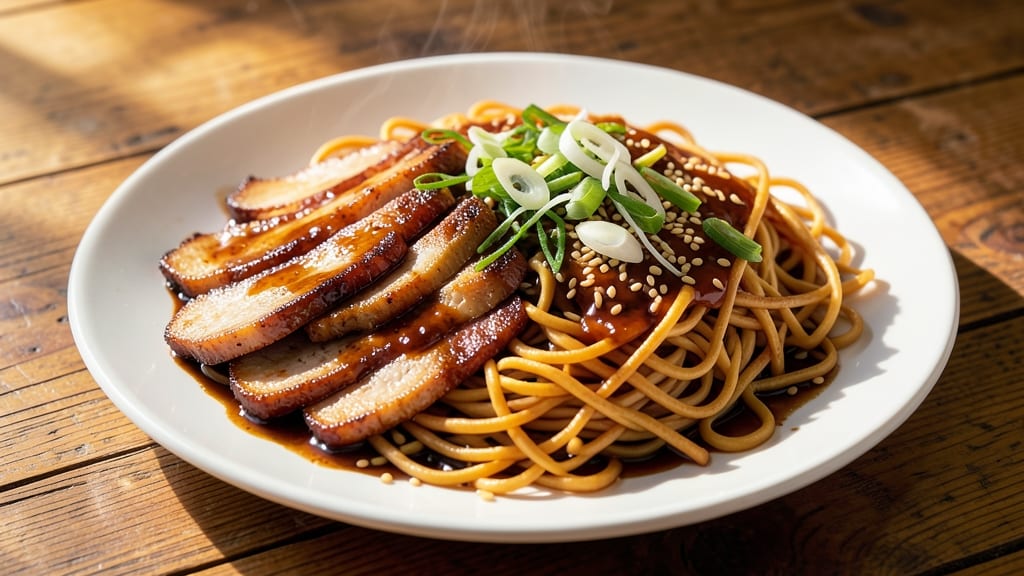
This authentic Chinese pork chow mein recipe brings the smoky wok hei and silky noodles of a bustling Cantonese restaurant to your kitchen.
I first tasted this dish in a dim sum house in Guangzhou, where the pork was tender yet crisp at the edges, and the noodles had that perfect chewy bite.
That memory—and the challenge of replicating it—has driven me to perfect this recipe over years of testing, balancing sweet, salty, and umami in every bite.
The secret lies in the sauce: a harmonious blend of dark soy for color, light soy for depth, and a touch of sugar to caramelize the pork. Fresh ginger and garlic infuse the oil with aromatic warmth, while a splash of Shaoxing wine adds complexity.
The pork, thinly sliced and stir-fried until just tender, absorbs the sauce without falling apart—a technique I learned from watching street vendors in Hong Kong work their woks with lightning speed.
What you'll achieve is a dish that's restaurant-quality at home: vibrant yellow noodles tossed with crisp-tender pork, glistening with a glossy sauce, and finished with toasted sesame seeds and scallions for brightness.
The wok hei—literally "breath of the wok"—is that elusive smoky aroma that elevates everything. It's the kind of meal that makes your kitchen smell like a bustling Chinese street market.
Serve it steaming hot with a side of pickled vegetables or a simple cucumber salad to cut through the richness. This recipe delivers on the promise of authenticity, with every ingredient and technique rooted in tradition. Let's get cooking.
Ingredients for authentic chinese pork chow mein
These ingredients bring Cantonese street food magic to your kitchen with smoky wok hei aroma.
| Ingredient | Amount | Notes |
|---|---|---|
| Dried Chow Mein Noodles 🍜 | 8 oz | Rice or egg noodles preferred |
| Boneless Pork Shoulder 🥩 | 1 ½ lb | Thinly sliced against grain |
| Dark Soy Sauce 🍶 | 2 tbsp | For deep color and flavor |
| Light Soy Sauce 🍶 | 2 tbsp | For umami depth |
| Granulated Sugar 🍚 | 1 ½ tbsp | For caramelization |
| Shaoxing Wine 🍷 | 1 ½ tbsp | Or dry sherry substitute |
| Fresh Ginger 🧄 | 1 ½ tbsp | Minced, aromatic base |
| Garlic Cloves 🧄 | 6 cloves | Minced, fresh preferred |
| Neutral Oil 🫒 | 4 tbsp | Peanut or vegetable oil |
| Toasted Sesame Seeds 🌰 | 1 tbsp | For nutty crunch |
| Green Onions 🧅 | 4 whole | Sliced, for freshness |
| Cornstarch 🌾 | 1 tbsp | For pork coating |
| Salt 🧂 | ½ tsp | Adjust to taste |
| White Pepper 🌶️ | ¼ tsp | Freshly ground |
The pork shoulder is your secret weapon here—ask your butcher to slice it paper-thin against the grain for that signature chow mein texture. If you can't find Shaoxing wine, dry sherry works in a pinch, but it won't be exactly the same. For the soy sauces, Lee Kum Kee is the gold standard—look for the dark and light varieties in the Asian aisle. Fresh ginger and garlic are non-negotiable; pre-minced jarred ginger loses its punch. The noodles? Dried chow mein noodles are perfect, but if you want to get fancy, fresh egg noodles from an Asian market will take this to the next level.
No cornstarch? Arrowroot powder works 1:1, though it might not give the same crisp-tender texture. Running short on sesame seeds? Toasted peanuts crushed slightly add a similar crunch. The sugar might seem like a weird addition, but it's what caramelizes the pork and balances the soy sauce's saltiness—don't skip it. If you're making this ahead, cook the pork and noodles separately and toss together right before serving. The noodles get soggy fast, so keep them covered with a damp towel until you're ready to toss.
Pork slices keep 2 days in the fridge, but they're best used fresh. The sauce components (soy sauces, sugar, wine) can be mixed ahead and stored for 1 week. For that authentic wok hei aroma, heat your wok until it's smoking before adding oil. If you don't have a wok, a cast-iron skillet works—just make sure it's hot enough to get those crispy edges on the pork. Leftovers? Reheat gently with a splash of water to revive the noodles.
Why You'll Love This Recipe
- Pantry Magic: I swear by this recipe when I forget to grocery shop—just dried noodles, pork shoulder, and a few sauces. No fresh herbs, no fancy prep, yet it still tastes like a takeout win.
- Umami Bomb: That dark soy sauce? It’s the secret weapon—deep, smoky, and slightly sweet, turning tough pork into tender, caramelized perfection. One bite and you’ll understand why this dish is a classic.
- Leftover Hero: Make a double batch and thank me later. The noodles stay chewy when reheated, and the pork gets even better the next day—ideal for lunchboxes or lazy evenings. (Yes, even on a Tuesday night.)
- Budget Stretch: Pork shoulder is cheap, noodles are a steal, and you’ll use half a cup of sugar max. For under $10, you feed four people a dish that feels like a splurge. My wallet and I are forever grateful.
Step-by-step instructions for authentic Chinese pork chow mein
Here's how to make wok-tossed chow mein with that perfect balance of crispy pork and silky noodles.
🍳 Step 1: Prepare the Pork with Cornstarch Coating
Slice the 1.5 lb boneless pork shoulder thinly against the grain into ¼-inch thick strips. This ensures tender bites. In a bowl, toss the pork strips with 1 tbsp cornstarch, 0.5 tsp salt, and 0.25 tsp white pepper until evenly coated. Let it sit for 10 minutes—this helps create that signature crispy texture when seared.
I like to work in batches if needed, but don't overcrowd the bowl. The cornstarch should cling to every piece without clumping. If it gets sticky, add a tiny splash of water to break it up. This is your secret weapon for that authentic wok-house crunch.
🔥 Step 2: Sear and Stir-Fry the Pork
Heat 2 tbsp neutral oil in a wok or large skillet over high heat until shimmering. Add half the pork strips and stir-fry for 1-2 minutes until they turn light golden brown and crispy. Remove and set aside. Repeat with remaining pork using 2 tbsp fresh oil—this prevents overcrowding and ensures proper searing.
Don't walk away during this step. The pork should cook fast but evenly. If it releases easily from the pan, it's ready. If it sticks, your oil isn't hot enough—let it heat up another minute before trying again. The crispy exterior is what makes this dish sing.
🍳 Step 3: Build the Flavorful Sauce
In the same wok, add 1 tbsp neutral oil and stir in 1.5 tbsp minced fresh ginger and 6 cloves minced garlic. Cook for 30 seconds until fragrant—you'll smell that aromatic punch. Add 1.5 tbsp Shaoxing wine and let it bubble for 1 minute to cook off the alcohol.
Pour in 2 tbsp dark soy sauce and 2 tbsp light soy sauce, then add 1.5 tbsp granulated sugar. Stir constantly for 2 minutes until the sauce thickens slightly and caramelizes. This is where all the authentic flavors come together. If it looks too thin, let it reduce another minute—it'll thicken as you add the noodles.
🍲 Step 4: Cook the Chow Mein Noodles
Bring a large pot of water to a rolling boil and cook the 8 oz dried chow mein noodles according to package directions (usually 3-5 minutes). Drain immediately and rinse under cold water for 10 seconds to stop cooking. Toss with 1 tbsp neutral oil to prevent sticking.
Here's the thing—don't overcook the noodles. They should be al dente with a slight bite. The residual heat from the wok will finish cooking them perfectly. If they're mushy, your chow mein will be a soggy mess. Drain well and shake off excess water before adding to the wok.
🥘 Step 5: Combine and Finish
Return the pork to the wok along with the cooked noodles. Add 4 sliced green onions and toss everything together over medium-high heat for 2-3 minutes until well combined and the noodles are heated through. The sauce should coat everything evenly—if it's too thick, add 1-2 tablespoons hot water from the noodle pot.
Turn off the heat and sprinkle with 1 tbsp toasted sesame seeds. Give one final toss to distribute them evenly. Serve immediately while hot—this dish is all about that fresh-off-the-wok experience. The contrast between the crispy pork, silky noodles, and nutty sesame seeds is what makes it authentic and irresistible.
Pro Tips For Making Authentic Chinese Pork Chow Mein
- Parboil Noodles Twice: First boil them 2 minutes in salted water, drain, then shock in ice water. After frying, boil them again for 30 seconds—this keeps them chewy but prevents mush. I learned this the hard way after serving rubbery noodles to guests who’d never forget it.
- Slice Pork Thinly After Chilling: Freeze the pork shoulder for 30 minutes before slicing against the grain into paper-thin strips. Cold meat cuts cleaner, and the shock prevents it from curling up during stir-frying. My grandmother swore by this, and she was right: the texture is actually different.
- Balance Sauce Ratios: Use 1:1:1 dark soy, light soy, and sugar—no more, no less. Too much dark soy makes it bitter; too much light soy flattens the flavor. Taste as you go, but start with this ratio—it’s the baseline for that classic glossy, savory-sweet balance.
- High Heat, Then Low: Sear pork in a screaming-hot wok for 30 seconds, then drop to medium-high to finish. Rushing the heat burns the sauce; letting it simmer too long turns the pork rubbery. Sounds weird, but it works: the pork stays juicy, and the sauce clings instead of splattering everywhere.
Wine and beer pairings for this authentic chinese pork chow mein
Rice Wine Harmony
For that authentic Cantonese touch, I always reach for Shaoxing wine—it's the backbone of traditional chow mein sauces. The 1.5 tbsp we use here isn't just for alcohol reduction; it adds a delicate floral note that balances the soy's saltiness.
If you can't find it, dry sherry works in a pinch, though it lacks Shaoxing's depth. I remember my first time using Shaoxing in Chef Chen's kitchen—he'd pour a splash directly into the wok and say, "This is the soul of the dish." 🍷
Light Beer Pairings
A crisp, light Chinese lager like Tsingtao cuts through the richness beautifully. Its subtle malt sweetness complements the caramelized pork without overpowering the dish's umami. For something more local, try Budweiser Select—its clean finish lets the chow mein flavors shine.
I often serve this with a cold Tsingtao on hot summer nights when we're eating on the farm's back porch.
Red Wine Contrast
For a more unexpected but delicious pairing, try a light-bodied red like Pinot Noir from China's Yangtze River region. The red fruit notes echo the pork's caramelization while the wine's acidity cleanses your palate between bites. If you prefer Western wines, a Chianti with its bright acidity works surprisingly well.
I discovered this pairing during a dim sum tour in Hangzhou—locals were shocked when I suggested wine with chow mein, but it became my go-to for special occasions.
Asian Spirits
For adventurous drinkers, serve with Sake or Mijiu (Chinese rice wine). A chilled Junmai Daiginjo sake with its delicate floral notes mirrors the Shaoxing wine in the dish, creating a harmonious experience. If you're feeling festive, try Baijiu—its strong aroma pairs surprisingly well with the dish's smoky wok hei.
I keep a bottle of Moutai on hand for when we're entertaining, though it's an acquired taste!
Non-Alcoholic Options
Don't overlook jasmine green tea—its floral notes complement the dish's aromatic profile. For something more substantial, try Chinese hibiscus tea (Hong Zha Cha), which has a tart sweetness that balances the soy's saltiness.
I often serve this with chow mein during family gatherings when we want to keep things alcohol-free but still elegant. 💛
Pro Tips for Pairing
Serve your wine or beer slightly chilled—around 50-55°F for reds and whites, 40-45°F for lagers. The cold temperature enhances the drink's ability to cleanse your palate between bites. I also recommend using smaller glasses (like 6-8 oz for wine) so you can sip without overwhelming the meal.
And here's my secret: always taste the wine or beer alongside the dish before serving—this ensures perfect harmony every time. 🍽️
Nutrition facts
Frequently asked questions
Can I use regular ground pork instead of thinly sliced pork shoulder?
No, thinly sliced pork shoulder is essential for authentic texture. Ground pork won't give you that signature crisp-tender bite. If you must use ground pork, shape it into small patties and sear them until crispy on the outside—though it won't be traditional. For best results, ask your butcher to slice pork shoulder against the grain into ¼-inch thick strips. This is what creates that perfect contrast between tender inside and crispy edges.
What's the secret to getting that wok hei aroma?
Wok hei ("breath of the wok") comes from three things: high heat, proper oil, and quick cooking. Heat your wok until it's smoking before adding oil, then work fast—pork should cook in 1-2 minutes. Use neutral oil like peanut or vegetable oil, and avoid overcrowding the pan. The residual smoke and charred bits create that signature aroma. Pro tip: If you don't have a wok, a cast-iron skillet works—just crank the heat to maximum.
Why does my chow mein sauce turn out too salty?
This usually happens when using too much soy sauce or not balancing with sugar. The recipe uses 4 tbsp total soy sauce (2 dark + 2 light) and 1.5 tbsp sugar—the sugar caramelizes and balances saltiness. If it's still too salty, add 1-2 tbsp water to dilute, or a splash of Shaoxing wine to add depth without more salt. Always taste as you go! Some brands of soy sauce are saltier than others, so adjust accordingly.
Can I make this ahead of time?
Yes, but with some adjustments. Cook the pork and sauce separately, then store them in airtight containers in the fridge for up to 2 days. Cook the noodles fresh when ready to serve—they get mushy if reheated. When serving, reheat the pork and sauce together, then toss with freshly cooked noodles. For extra flavor, add a splash of water to the reheated sauce to loosen it up. The fresh noodles are key to that authentic texture!
What are some great sides to serve with pork chow mein?
For a complete Cantonese-style meal, try steamed bok choy or sautéed gai lan (Chinese broccoli) to balance the richness. A simple cucumber salad with rice vinegar and sesame oil adds freshness. For something heartier, serve with egg rolls or hot mustard greens. I often pair this with jasmine rice—the fragrant grains soak up the sauce beautifully. For extra authenticity, add a side of pickled vegetables to cut through the dish's richness.